West Virginia State Seal
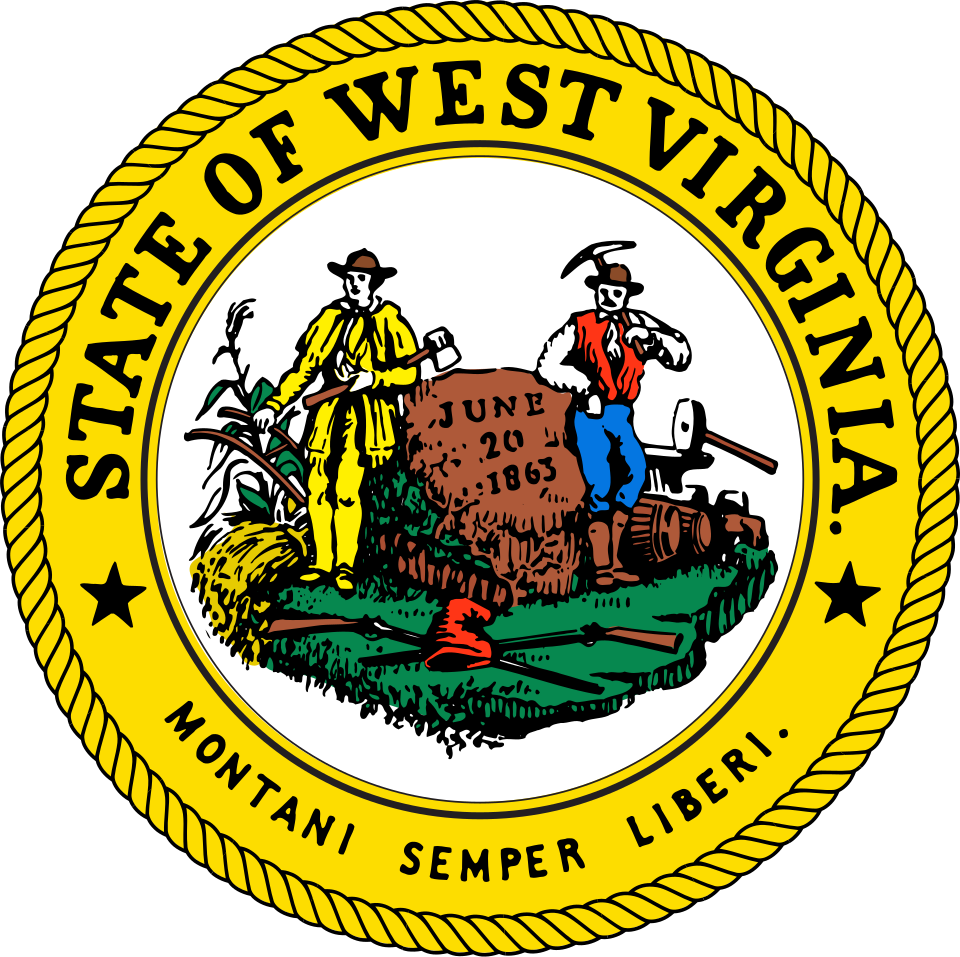
The Great Seal
As "keeper of the seal," the Secretary of State controls the use of the seal for any purpose other than official state business.
History
Joseph H. Diss Debar, an artist from Doddridge County, was chosen by the Legislature to prepare drawings for an official seal for the State of West Virginia. He submitted his drawings with an explanation of each detail. From these drawings, the Legislature adopted a seal which remains the Great Seal of the State of West Virginia to this day.
The seal contains the Latin motto Montani Semper Liberi, which means Mountaineers Are Always Free.
A large stone in the center of the seal stands for strength. On the stone is the date on which West Virginia was admitted to the Union, June 20th, 1863.
The farmer with his axe represents agriculture and the miner with his pick represents industry. In front of the rock are two rifles, crossed and surmounted at the place of contact by the cap of liberty, indicating that freedom and liberty were won and will be maintained by force of arms.
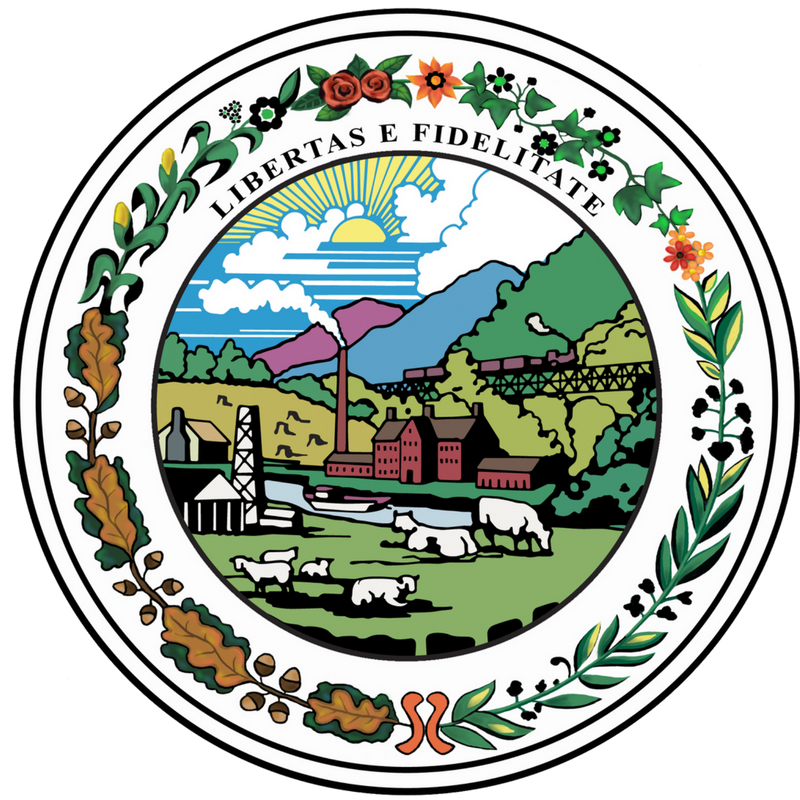
The Less Seal
The Less Seal of the State is the same as the Great Seal except in dimensions.
The Secretary of State is the official keeper of both the Great and Less Seals.
While the seal was designed and adopted with two sides, only the front side is in common use. The reverse side with its laurel and oak leaves, log house, hills and factories is the Governor's Official Seal.